

Capital Region Small Business Week 2026
A lot of founders do not need another inspirational speech.
They need to know where to find capital, how to meet the right resource partners, who can help with contracts, and where to get honest feedback before they spend six months building the wrong thing.
That is why Capital Region Small Business Week is worth paying attention to.
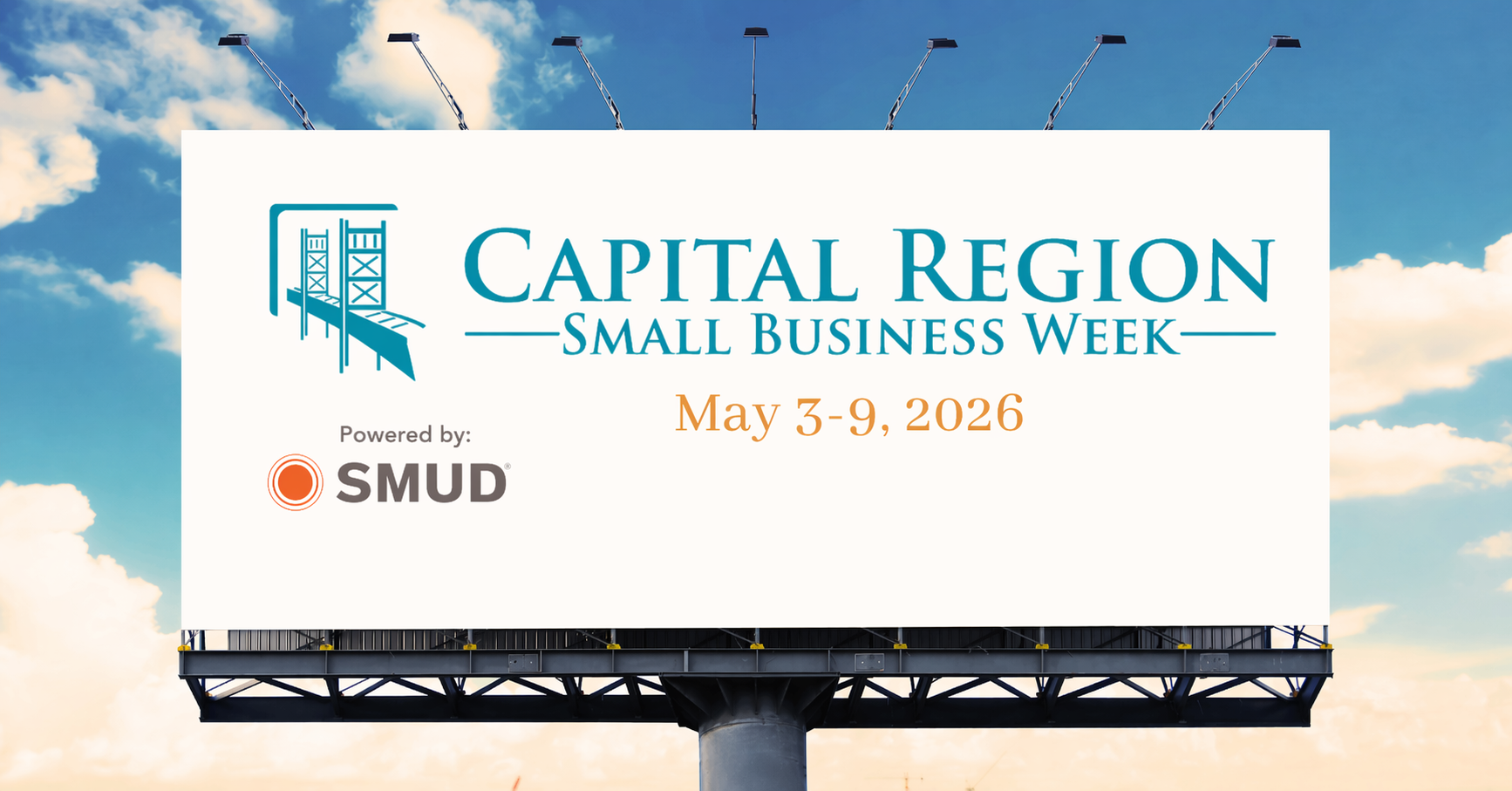
Running May 3–9, 2026, Capital Region Small Business Week brings together entrepreneurs, small business owners, business experts, public agencies, lenders, mentors, and community organizations across the Greater Sacramento region. The week is powered by SMUD and is designed to help local business owners meet, learn, and network with Sacramento’s business leaders.
For anyone starting, running, funding, or supporting a business in the Sacramento region, this is a useful week to get plugged in.
What Is Capital Region Small Business Week?
Capital Region Small Business Week is an annual regional event held during the first week of May. Its purpose is to celebrate the region’s entrepreneurial spirit and connect small business owners with practical resources, expert advice, and peer support.
The week includes events across multiple days and locations throughout the Sacramento area. That matters because small business support is often fragmented. One organization helps with lending. Another helps with mentoring. Another helps with government contracting. Another helps with startup education.
Capital Region Small Business Week brings many of those resources into one coordinated week.
Why It Matters for Local Entrepreneurs
Small businesses are a major part of the Sacramento-area economy, but many owners still struggle to find the right support at the right time.
Some are trying to launch.
Some are trying to get their first customers.
Some are trying to access capital.
Some are trying to win government contracts.
Some are simply trying to meet other people who understand what it feels like to build something from scratch.
Capital Region Small Business Week gives entrepreneurs a structured way to find those connections.
1. Start With the Resource Expo
The week includes the Capital Region Small Business Week Resource Expo on Monday, May 4, from 1:00–4:00 p.m. at the Mack Powell Event Center in Sacramento. The expo is designed to connect business owners and aspiring entrepreneurs with organizations that provide programs, services, and support.
This is a good starting point for anyone who is not sure where to begin.
Entrepreneurs can use the expo to ask basic but important questions:
Who helps with business planning?
Where can I find funding or lending support?
What programs exist for small businesses?
Are there resources for women-owned, veteran-owned, minority-owned, or local businesses?
Who can help me understand contracting, certification, or technical assistance?
My suggestion is to walk in with three specific questions. Otherwise, it is easy to collect brochures and leave with homework but no clear next step.
2. Use the Week to Learn, Not Just Network
Networking is useful, but education is where many founders get unstuck.
The event calendar includes sessions focused on different stages of business ownership. For aspiring entrepreneurs, From Idea to Action: A Startup Workshop for Aspiring Entrepreneurs takes place on Tuesday, May 5, from 5:30–7:30 p.m. at Roseville Venture Lab. The workshop is positioned as a practical, beginner-friendly session for people who want to clarify a business concept, test an idea, hear from a local founder, and connect with others exploring entrepreneurship.
That is especially useful for people who are still in the “I have an idea” stage.
The goal at that stage is not to write a 40-page business plan. The goal is to answer a few simple questions:
Who has the problem?
How painful is it?
What are they doing today instead?
Would they pay for a better solution?
What is the smallest test you can run?
In plain English: before you build the thing, make sure somebody wants the thing.
3. Get Feedback From the Startup Community
On Wednesday, May 6, 1 Million Cups Sacramento will meet from 8:30–10:00 a.m. at the Carlsen Center at Sacramento State University. 1 Million Cups is a weekly gathering where entrepreneurs present early-stage business ideas and receive feedback from founders, mentors, and business professionals.
This is one of the most practical formats for early-stage founders.
A founder presents.
The community asks questions.
The founder gets feedback.
No pitch theater. No smoke machine. No pretending every startup is “crushing it.”
For early-stage entrepreneurs, that kind of feedback can be more valuable than a polished pitch deck. It helps founders hear what is confusing, what is compelling, and what needs work.
4. Find Mentors Who Can Help With Specific Problems
Also on Wednesday, May 6, the Mentor Sprint runs from 10:45 a.m.–12:30 p.m. at the Carlsen Center. The format is speed mentoring, with focused 15-minute, one-on-one sessions for early-stage entrepreneurs and small business owners.
This is a useful format because it forces clarity.
You do not have an hour to ramble through your entire founder journey. You need to identify the problem and ask for help.
Good Mentor Sprint questions might include:
“I’m getting interest but not conversions. What should I test?”
“I need capital but I’m not venture-backable. What are my options?”
“I’m selling to government agencies. Where should I start?”
“I have a service business and want to hire my first employee. What should I watch out for?”
The more specific the question, the more useful the mentoring.
5. Learn About Capital and Contracting
Access to capital is one of the biggest challenges for small businesses. Capital Region Small Business Week includes several sessions that address funding, lending, and contracts.
On Thursday, May 7, Small Business Capital Connection runs from 8:00–11:30 a.m. at the Sacramento Regional Builders Exchange. The event is hosted by California Capital FDC and is designed to connect small businesses with agencies, lenders, technical assistance providers, and experts focused on contracts and capital.
There is also a session called How Small Businesses Win Government Contracts: What Nobody Tells You About Getting Paid by the Government, hosted by VETS Sacramento on Wednesday, May 6, from 6:30–8:00 p.m. at Frequency Coworking & Events in Rancho Cordova. The session focuses on the practical realities of government contracting.
That is important because selling to government is not the same as selling to consumers or private companies.
The process can include registrations, certifications, procurement rules, bid timing, relationships with prime contractors, and long sales cycles. It is not impossible, but it does require learning the game.
6. Pay Attention to AI and Workforce Trends
Small businesses are also facing a changing workforce and technology landscape.
The AI Career Pathways Workshop takes place on Wednesday, May 6, from 1:30–4:30 p.m. at the Carlsen Center. Hosted by NAWBO and the Carlsen Center, the workshop focuses on in-demand AI careers, emerging roles, essential skills, and practical tools.
For small business owners, this is not just a “tech” topic.
AI is already affecting marketing, customer service, operations, bookkeeping, sales, content creation, recruiting, and administrative work. The practical question is no longer whether AI matters.
The question is: which tools can help a small business save time, reduce costs, or improve service without creating chaos?
That is a conversation worth having now.
7. Celebrate the Region’s Small Business Community
Capital Region Small Business Week also includes events that celebrate local business owners and community leadership.
The Capital Region Small Business Awards luncheon and business expo will take place on Wednesday, May 6, from 11:00 a.m.–2:00 p.m. at the Sacramento Memorial Auditorium. The event honors the achievements of small business owners across the region.
Celebration matters.
Small business owners spend a lot of time dealing with problems: payroll, sales, hiring, insurance, rent, taxes, marketing, and the occasional website plugin that decides to ruin your morning.
Taking time to recognize the people building businesses in the region helps strengthen the broader ecosystem.
The Organizations Behind the Week
One of the strengths of Capital Region Small Business Week is the number of partners involved.
The website lists participating partners and organizers including SMUD, California Capital Financial Development Corporation, the Carlsen Center for Innovation & Entrepreneurship, the City of Sacramento, StartupSac, Sacramento County, the U.S. Small Business Administration, SCORE, Sacramento Valley SBDC, Sacramento Entrepreneurship Academy, City of Roseville, Frequency Coworking, NAWBO Sacramento, California Office of the Small Business Advocate, and the California State Treasurer’s Office, among others.
That breadth is useful because entrepreneurs need different kinds of help at different stages.
A brand-new founder may need idea validation.
A growing company may need capital.
A certified small business may need contracting opportunities.
A solo operator may need peer support.
A scaling company may need workforce, technology, or procurement guidance.
No single organization solves all of that. A connected ecosystem can.
How to Make the Most of the Week
Do not try to attend everything.
Instead, pick events based on your current business bottleneck.
If you are just getting started
Start with the Resource Expo and From Idea to Action.
Your goal is to clarify the business idea, identify next steps, and learn which organizations can help.
If you need feedback
Attend 1 Million Cups Sacramento or Mentor Sprint.
Your goal is to explain your idea clearly and get honest input from people who have seen other startups succeed and struggle.
If you need money
Look at Small Business Capital Connection and funding-focused sessions.
Your goal is to understand what lenders, agencies, or funders need to see before they can help.
If you want to sell to government
Attend the government contracting workshop.
Your goal is to understand the procurement process before spending months chasing the wrong opportunity.
If you want to understand AI’s impact
Attend the AI Career Pathways Workshop.
Your goal is to understand how AI may affect your business, your employees, and your future hiring needs.
Final Takeaway
Capital Region Small Business Week is not just a celebration. It is a practical entry point into the Sacramento region’s small business support network.
If you are building a business, choose one event that helps solve today’s problem and one event that introduces you to people who can help with tomorrow’s opportunity. That is how small businesses move from isolated effort to real momentum.
